 ChatGPT
 Perplexity
 Claude
 Grok
Grok

Qualification now: Why further training is vital for SMEs
Employee training is a key success factor for small and medium-sized enterprises (SMEs) today, especially when it comes to developing data and AI skills.
New digital technologies and data-driven concepts such as artificial intelligence and Big Data are rapidly changing business processes. Without targeted further training for their employees, SMEs run the risk of being left behind.
The quickest way to acquire new skills is through your existing team. And the cheapest? Thanks to state funding via the Qualification Opportunities Act (QCG). So you can Save time, minimize costs and bring your team up to speed at the same time.
Faster to success: How to qualify your team without long waiting times
Finding new skilled workers often takes a very long time and incurs high costs. It is much more efficient to train your own employees:
- Quick start: Employees are already familiar with processes, customers and products.
- Targeted skills development: Further training covers exactly the skills that your company needs - e.g. data analysis, reporting or AI applications.
- Immediate effect: New knowledge is applied directly in practice.
Practical example: A medium-sized mechanical engineering company trained its sales team in data analysis. Instead of gut feeling, the team now uses data to identify sales trends - within three months, stock levels were reduced by 15 %. At the same time, the sales closing rate increased by 10 %.
Use the QCG subsidy: How to reduce further training costs to a minimum
The QCG relieves companies of the burden of training employees with grants of up to 100 % of the training costs.
Your advantages:
- Cost-neutral implementation: Continuing education is heavily subsidized.
- Individually fitting: Funded programs are tailored to digital transformation and current business needs.
- Especially helpful for SMEs: Even with small budgets, you can qualify your team for the future.
Qualification Opportunities Act: Requirements
- Professional training of more than 120 hours: The measure must comprise a minimum duration of 120 hours. This applies to both external and internal training courses.
- Approved training providers: The training must be provided by an AZAV-certified training provider. are carried out. Such providers are in the Course portal of the Federal Employment Agency (KURSNET) listed.
- Eligible contents: Funding is available for further training that imparts knowledge that goes beyond purely job-related, short-term adaptation training. Training courses on in-house software solutions, for example, are not eligible for funding.
- Continuation of the employment relationship: The employment relationship must be maintained during the training and employees must be released from work with continued payment of their salary.
- Targeted further training: Further training should aim to qualify employees for the general labour market, particularly in areas affected by structural change or digitalization.
Source: Federal Employment Agency
Tip: Check at an early stage which training courses are subsidized and plan the qualification strategically. This will maximize the benefits while minimizing costs.
The most important information - collected in one document.
StackFuel is one of Germany's leading providers of digital training programs in the fields of data & AI literacy, data analytics & data science, artificial intelligence and programming.
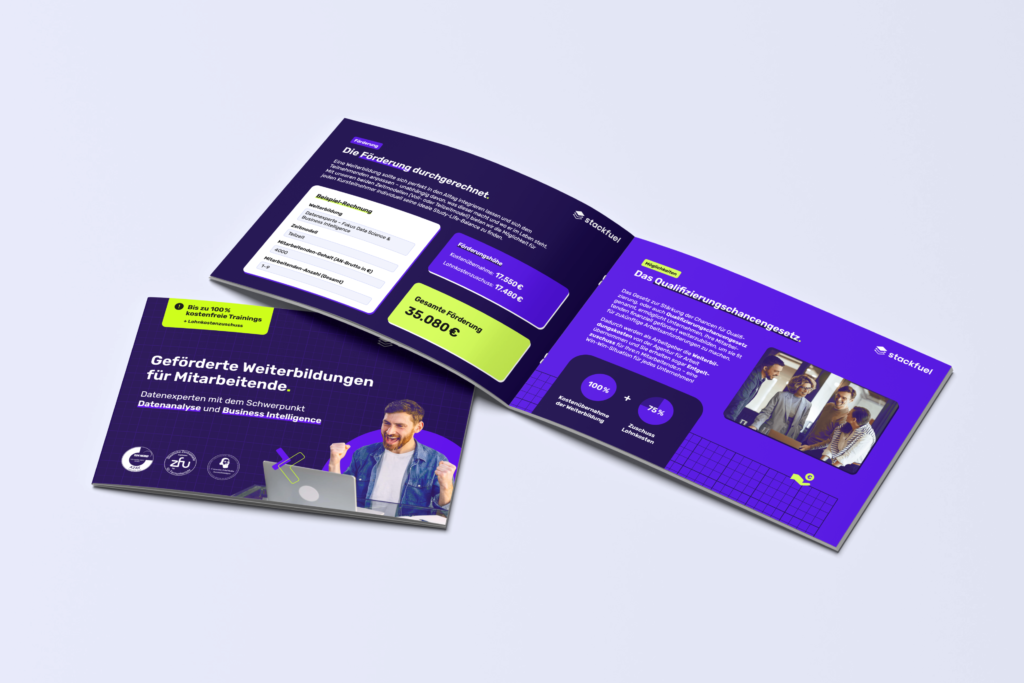
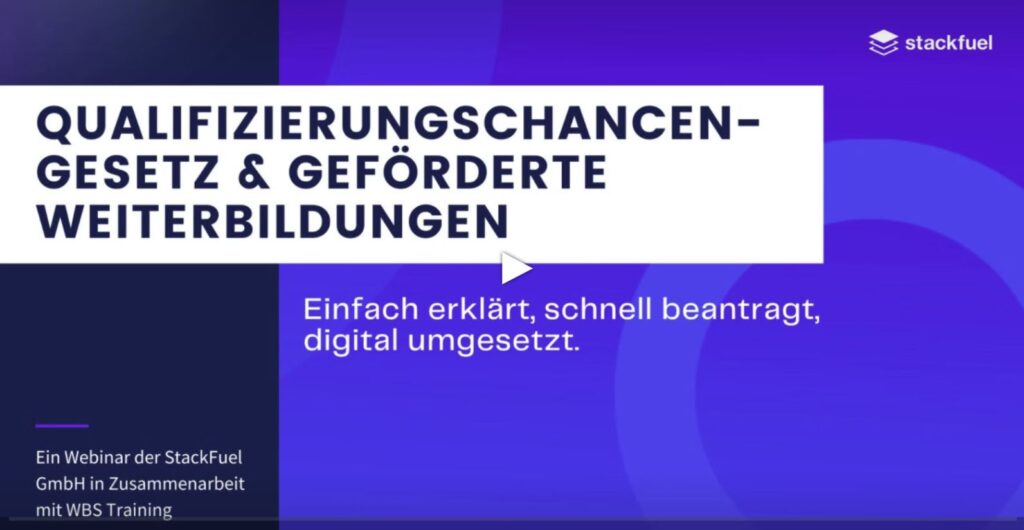 Take a look at our free Webinar on the Qualification Opportunities Act an.
Data and AI skills as key competencies
Data literacy: more than just numbers
Employees with strong data skills make informed decisions, identify trends at an early stage and use data to optimize processes.
| Skills that are built up: | Business Impact: |
|
|
Skills that are built up:
- Collect, structure, cleanse and process data
- Recognizing trends and patterns
- Use tools for analysis and visualization
- Making fact-based decisions
Business Impact:
- Control processes more precisely
- Better recognize customer needs
- Minimize risks at an early stage
- Identify sales opportunities
Practical example: An SME from the retail sector was able to increase forecasting accuracy for repeat orders by 20 % through targeted data literacy training and at the same time reduce inventory costs.
 Take a look at our free Webinar on rolling out data skills in the company an.
AI expertise: innovation through technology
Opening up AI competencies Automation potential and new business opportunities.
| Skills that are taught: | Business Impact: |
|
|
- Automation of repetitive tasks
- Development of innovative products or services
- Identification of new business opportunities
Business Impact:
- More efficiency in day-to-day business
- Error reduction for routine activities
- New sales potential through digital business models
Practical tip: Start with piloted AI projects in one team or process area before rolling out AI across the company. This will allow you to gain experience and minimize risks.
How to successfully qualify employees in your company
With a clear roadmap, you can effectively build up data and AI skills.
- Determine demand: What specific skills are missing? Where are the gaps in data and AI expertise?
- Develop a plan: Customized training, internal workshops, external training - especially in data and AI skills.
- Secure funding: Submit QCG application, reduce costs.
- Start training: Choose practical programs, ensure transfer to everyday working life.
- Measuring success: Check progress, obtain feedback, make results visible.
Practical tip: A combination of online training and hands-on projects brings the best results - combine theory + practice.
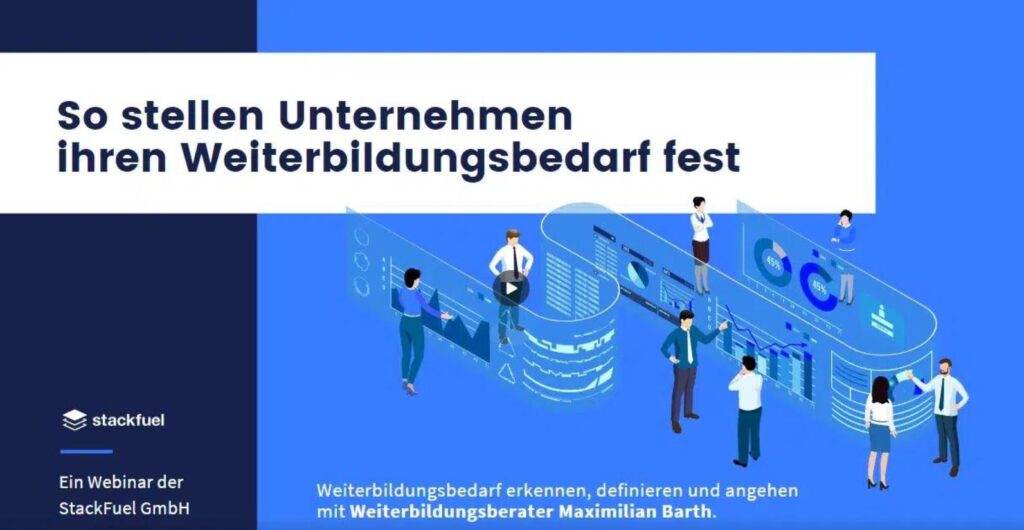 Watch our free webinar: This is how companies determine their training needs.
Conclusion: Employee qualification is the key to success
Training employees in data and AI skills is the fastest and cheapest way to future-proof your company.
Your advantages at a glance:
- Speed: Your existing team applies new knowledge immediately.
- Cost advantage: Thanks to QCG, the investment remains minimal.
- Sustainability: Employees continue to develop, innovative strength increases, competitiveness is maintained.
👉 Act now: Plan further training strategically, use funding and make your team fit for the digital future.